


Quick Summary
Yes, less foam is usually normal with soapnut cleaner. Foam comes from natural saponins and depends on concentration, water hardness and dilution, not on cleaning power. Judge results by rinse, residue and fabric feel rather than bubbles.
- Soapnut foam is smaller and softer than synthetic detergent foam, by design.
- Hard water binds saponins and reduces lather; a shake test in a clear bottle reveals it.
- Check grease removal by seeing whether rinse water sheets off evenly instead of beading.
- Dilute about 1 part liquid to 10 parts water for hand washing dishes.
- Do not add extra product to chase bubbles, because residue can build up on surfaces and fabrics.
Is It Normal for Soapnut Cleaners to Produce Less Foam?
Last Updated: 26 November 2026
Is it normal for soapnut cleaners to produce less foam? In most cases, yes. The amount of foam depends on factors such as saponin concentration, water quality and dilution ratio. Less foam does not necessarily mean weaker cleaning performance.
Soapnut Republic uses soapnut fruit extract as the foundation of its gentle, plant-based cleaning products. Here are five reasons why your soapnut cleaner may produce less foam and what they mean.
Is It Normal for Soapnut Cleaners to Produce Less Foam?
Yes, less foam is often normal with soapnut cleaner. Foam comes from saponins, natural surfactants in soapnut berries. The amount of foam in a soapnut cleaner depends on how much saponin is present, your water type, and how much product you use.
Many shoppers expect bubbles like those from synthetic detergents. Natural soapnut products usually produce less lather, and that is by design.
- Soapnut foam is smaller and softer than synthetic foam
- Foam fades quickly in hard water
- Too much water dilutes the saponins
Why soapnuts produce foam: the role of saponins
Soapnuts contain saponins, which act as natural surfactants. When you shake or stir the liquid, saponins reduce surface tension and trap air, creating bubbles.
The saponin content of the berry sets the upper limit on foam. The saponin content of the berry influences how foam forms.
Watch out: foam can look weak even when the solution is strong. Do not add extra product just to make bubbles.
Foam quantity versus cleaning power: why foam doesn't equal clean
Foam is a visible sign that surfactants are active, but it is not a measure of how much dirt is being lifted. Learn what each ingredient does in natural cleaning products for a deeper understanding. Saponins work by lowering the surface tension of water, which helps grease and grime lift from a surface. That process can happen with little visible lather, especially when the liquid is dilute. Synthetic detergents often add foaming agents, but bubbles are not a reliable indicator of cleaning performance.
Because foam is an unreliable signal, judge performance by observable results instead. These checks work for dishes, surfaces and laundry:
- Grease removal: after washing a greasy pan or plate, rinse with plain water. If the water sheets off evenly rather than beading into droplets, the grease has been removed. Beading suggests residual oil.
- Residue check: wipe a cleaned surface with a dry white cloth or paper towel. A clean result leaves no grey or sticky film. A film means too much product or insufficient rinsing.
- Streak test on glass: clean a small pane or mirror, let it dry fully, and look at it at an angle. Streaks point to over-concentration; a clear finish points to correct dilution and rinsing.
- Fabric feel after drying: laundry cleaned well with soapnut liquid feels soft and does not stiffen. Stiffness can indicate residue build-up from using too much product or from hard-water minerals.
- Smell test: fabrics and surfaces should smell neutral after drying. A sour or musty smell can mean the liquid has spoiled or the item stayed damp too long.
- Repeat over several uses: one wash is not enough to judge. Compare results across a week of normal use rather than a single load or sink.
A common pattern is that people add more product when they see low foam, which increases residue and can make surfaces feel tacky, the opposite of clean. If your results pass the checks above, the low foam is normal and you should not change anything. If results fail, work through the dilution and water-hardness guidance rather than chasing bubbles.
Watch out: do not use foam as a tie-breaker between two dilutions. Judge by the rinse and residue checks, because a stronger mix can foam more while leaving more behind.
Soapnut cleaner dilution ratio: how much to use
Dilution is the single biggest factor you control over foam and cleaning results. Too much water weakens the saponins until the liquid barely lathers; too little product wastes money and can leave a sticky film on surfaces and fabrics. The right ratio depends on the task, the concentration of your starting liquid, and your water hardness.
Start with the ratio on your product label, then adjust using these cautious starting points. They assume a standard concentrated soapnut extract; if your product is already diluted or you made your own extract, begin at the weaker end and strengthen only if results disappoint.
- Dishes (hand washing): about 1 part soapnut liquid to 10 parts warm water. For a sink of water, that is roughly 2 tablespoons (30 ml) of liquid per 5 litres. Greasy pans may need a stronger mix applied directly.
- Laundry: about 1 part liquid to 20 parts water in the machine, or follow the detergent drawer marking. For a front loader, 30-50 ml per load is a common starting point; top loaders may need slightly more.
- Spray bottle for surfaces: 1 part liquid to 5-10 parts water. A stronger mix clings better to vertical surfaces but may streak on glass.
- Foam dispenser: 1 part liquid to 3-5 parts water. Foam dispensers need a thinner liquid to pass through the pump, so do not over-concentrate.
- Heavy grease or stained fabric: apply a small amount of undiluted liquid to a cloth or directly to the stain, rub gently, then wipe or rinse. Undiluted liquid is not a substitute for dilution in the wash, it is a spot treatment.
Measure rather than guess. Kitchen spoons and a marked jug are enough; inconsistent ratios are a common reason people blame the product for poor foam or poor cleaning. Read how to judge concentration from the ingredient label to understand what your product contains. Mix only what you need for the session, because diluted soapnut liquid spoils faster than concentrate.
Watch out: if you increase the concentration and still see no improvement in cleaning, the problem is more likely water hardness or an old, degraded extract than insufficient product. Adding more liquid past a certain point only leaves residue.
A practical troubleshooting flow for low foam: first check the label ratio and measure; second test your water (see the hard-water section below); third confirm the extract is fresh and has been stored correctly; fourth try slightly warmer water; and only then increase concentration modestly. Work through these in order rather than jumping straight to a stronger mix.
The right dilution matters more than the amount of foam, so here is a quick guide to the starting ratios for each task.
| Task | Starting ratio | Note |
|---|---|---|
| Dishes (hand washing) | 1 part liquid to 10 parts water | About 2 tablespoons per 5 litres |
| Laundry | 1 part liquid to 20 parts water | 30-50 ml per front-loader load |
| Spray bottle for surfaces | 1 part liquid to 5-10 parts water | Stronger mix clings better |
| Foam dispenser | 1 part liquid to 3-5 parts water | Thinner liquid passes through the pump |
| Heavy grease or stains | Undiluted, applied to a spot | Spot treatment, not a wash substitute |
Soapnut cleaner hard water: testing and fixing low lather
Hard water contains minerals such as calcium and magnesium, which bind to saponins and reduce foam. This is one of the most common reasons for low lather.
To test your water, fill a clear bottle halfway, add a small amount of soapnut cleaner, and shake for ten seconds. If bubbles vanish within a few seconds, your water is probably hard.
Fixes that help:
- Use slightly warmer water to dissolve the liquid
- Add a little more product to compensate
- Consider a simple water filter for cleaning use
Soapnut cleaner washing machine: use it without expecting bubbles
Front-loading and top-loading machines both work with soapnut liquid, but foam will be low. The machine's agitation does the cleaning, not the bubbles.
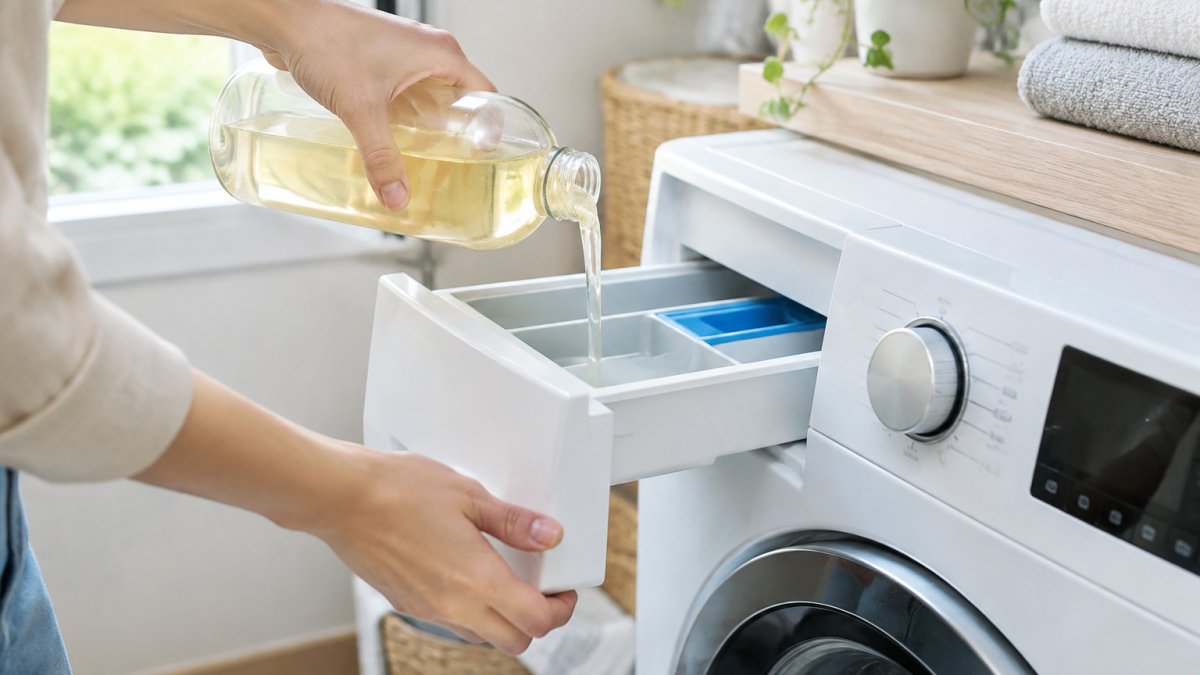
Pour the measured amount into the detergent drawer or directly into the drum before the load. Do not overfill, since residue can build up on fabrics and in the machine.
Clothes can come out clean and fresh even with almost no visible foam. A quick check is to look at the fabric after drying: it should feel soft, not stiff.
Hard water is common in many homes, so the water test above also applies to laundry. Check whether soapnut cleaner suits eczema-prone skin before using it on your hands.
Frequently Asked Questions
Is it normal for soapnut cleaner to produce little foam?
Yes, it is normal. Soapnuts contain saponins, which create lather, but foam levels vary with water hardness, dilution, and the product's concentration. Little foam does not mean the cleaner has stopped working. Judge the result by whether grease lifts and surfaces rinse clean, rather than by how many bubbles appear.
Does hard water reduce the foam from soapnut cleaner?
Hard water contains calcium and magnesium ions that interfere with saponins, so less lather forms. Soft or filtered water usually produces more foam. If your water is hard, use a little more product, or consider a water-softening step, and check whether cleaning results remain satisfactory before adjusting the dose.
How much should I dilute soapnut cleaner?
The right ratio depends on the task. For light everyday cleaning, dilute the liquid according to the label, then test on a small area. For tougher grease, you can use it more concentrated, though undiluted use is only suitable for stubborn spots. Start with the label guidance, adjust gradually and keep notes on what works for your water and surfaces.
Can I use soapnut cleaner in a washing machine?
Yes. Add the liquid to the detergent drawer or drum as directed, and expect less foam than with conventional detergents. Low foam is not a sign of poor washing. If clothes do not come out clean, check the dose, water hardness and load size before increasing the amount.


