


Last Updated: November 8, 2026
Quick Summary
Soapnut soap base is a plant-derived cleansing bar made with extract from the Sapindus fruit, whose natural saponins act as mild surfactants that dissolve oils and lift dirt without the tight, squeaky feeling of ordinary soap. Soapnut-based formulas are designed for families with young children and sensitive skin, though the base is a gentle cleanser rather than a medical treatment.
- Saponins lower the surface tension of water, letting it mix with oil and carry dirt away.
- A transparent base should list soapnut berries first, with scent from pure essential oils.
- Most soap bars sit around pH 9 to 10, while skin's surface is around pH 4.5 to 5.5.
- Melt-and-pour steps: cut into cubes, melt over simmering water, pour into a mould and cool.
- Start with one bar or bottle and see how your skin responds before buying more.
Table of Contents
- What Soapnut Soap Base Does and How It Cleans
- Soapnut Soap Base Ingredients and What Full Transparency Looks Like
- Soapnut Soap Base vs Conventional Soap: What Actually Changes
- How to Use Soapnut Soap Base for Skin, Hair and DIY Bars
- Soapnut Fruit Uses Beyond the Soap Base
- Choosing a Soapnut Soap Base for Your Family
- Frequently Asked Questions
What Soapnut Soap Base Does and How It Cleans
Soapnut soap base is a plant-derived cleansing bar made with extract from the Sapindus fruit. Its natural saponins act as mild surfactants, dissolving oils and lifting dirt without the tight, squeaky feeling of ordinary soap. Soapnut-based formulas are designed for families with young children and sensitive skin. Below, we explain what the base can realistically do, how to use it, and what to check before you buy.
Saponins: The Plant Surfactant Behind the Lather
Saponins are natural compounds in the soapnut fruit that lower the surface tension of water, letting it mix with oil and carry dirt away. They are why a soapnut product foams at all, though the lather stays gentler and less dense than a synthetic detergent's. The cleansing action is real, but it works through mild emulsification rather than aggressive degreasing.
What the Base Can and Cannot Claim
The base is positioned as a gentle cleanser. It is not a medical treatment. A short ingredient list makes it easier to check what a product contains. A product labelled "soapnut" can still list soapnut extract near the bottom and synthetic surfactants near the top, meaning the soapnut does very little work.
Soapnut Soap Base Ingredients and What Full Transparency Looks Like
A transparent soapnut soap base should list soapnut berries first, with any scent coming from pure essential oils rather than fragrance. That order matters more than front-of-pack marketing: when soapnut berries lead the list, the saponin content is meaningful; when they appear after water, salt and fragrance, the soapnut is a token ingredient. Soapnut Republic HK products list soap nut berries as the top ingredient, use scents from pure essential oils with no fragrance added, and provide full ingredient lists. Readers who want to compare formulations can browse all products.
How to Read a Soapnut Soap Base Ingredient List
Ingredient lists are ordered by weight until the final ingredients, which may appear in any order below 1%. Melt-and-pour soap bases generally contain several functional groups, and knowing what each does helps you judge a product's formulation.
- Soapnut extract or soapnut berry powder, the source of saponins, the plant surfactants that create mild lather and help lift oil. Its position near the top is the clearest signal of a meaningful amount.
- Soap salts (sodium or potassium salts of fatty acids), the actual bar-forming cleansers in most melt-and-pour bases. Even a soapnut base usually relies on these to hold its shape and lather, so the soapnut works alongside them rather than replacing them.
- Glycerine, a humectant that draws water to the skin and contributes to the less-tight post-wash feel.
- Water, sugars and solvents, water adjusts consistency, while sugars such as sorbitol or sucrose improve clarity, hardness and lather. These are normal in transparent bases, not a sign of dilution.
- Fragrance, colourants and preservatives, essential oils are preferable for scent-sensitive households, but "fragrance" or "parfum" can hide dozens of compounds. Colourants are cosmetic only, and preservatives are usually unnecessary in a low-water solid bar.
Why Two Products with the Same Name Can Differ
"Soapnut soap base" is a category description, not a recipe. Two bars with identical front-of-pack wording can differ in the ratio of soapnut extract to soap salts, the oil used (olive, coconut, palm or a blend), the glycerine level, and whether scent comes from essential oils or synthetic fragrance.
Watch out: a label that says "contains soapnut" without a percentage or a position in the list tells you almost nothing about how much saponin is actually present. If a brand will not show the full INCI list before purchase, treat the soapnut claim as marketing rather than formulation.
Soapnut Soap Base vs Conventional Soap: What Actually Changes
Conventional soap and synthetic body washes differ in their cleansing agents and added ingredients. A soapnut soap base is milder and biodegradable, which matters if you rinse into a greywater system. It is intended for everyday handwashing, face washing and body cleansing rather than heavy cooking grease.
| Feature | Soapnut soap base | Conventional soap |
|---|---|---|
| Main cleanser | Plant saponins from Sapindus plus soap salts | Synthetic surfactants or tallow soap |
| Lather | Soft, low-density | Dense, high-volume |
| Post-wash feel | Less tight, more moisturised | Can feel dry or squeaky |
| Scent source | Pure essential oils | Often added fragrance |
| Biodegradability | Readily biodegradable | Varies by formula |
| pH | Typically alkaline (soap-based) | Varies; syndets can be pH-adjusted |
The pH Point Most Comparisons Skip
A soapnut soap base is still a soap, so it is typically alkaline, most soap bars sit around pH 9 to 10. Skin's natural surface is mildly acidic, around pH 4.5 to 5.5, so any true soap temporarily raises skin pH with each wash. For hands and body this is usually well tolerated, especially with glycerine to offset dryness. For facial skin, and particularly for anyone using acids, retinoids or a compromised barrier, an alkaline soap can sting or disrupt the barrier more than a pH-adjusted non-soap cleanser would.
Soap Versus Non-Soap Cleansers
In formulation, "soap" means the salt of a fatty acid, made by reacting oil with an alkali. Many liquid body washes and facial cleansers are instead synthetic detergents, or syndets, which can be formulated at skin-friendly pH and are often labelled "soap-free". A soapnut soap base sits in the soap camp unless the maker states otherwise, sharing soap's strengths (effective cleansing, ready biodegradability) and limits (alkaline pH, potential dryness). If a product calls itself a soapnut cleanser but lists no soap salts, it is likely a syndet with soapnut extract added.
What the Evidence Does and Does Not Show
Saponins are well documented in laboratory studies as surfactants, and some research has examined their antimicrobial activity in controlled settings. That is not the same as proving a soapnut bar treats eczema, clears acne or disinfects skin to a clinical standard. Most practitioners treat these products as mild cleansers, not treatments; people with sensitive skin often find them less drying than a supermarket bar without expecting a medical effect. If you have a diagnosed skin condition, a soapnut bar is not a substitute for prescribed care.
Environmental Claims in Context
Soapnut extract itself is plant-derived and readily biodegradable, but a finished bar's environmental profile depends on the whole formula: the oils used, whether palm oil is certified, the packaging, and how far the product travelled. Treat "biodegradable" as one useful data point rather than a complete sustainability claim.
How to Use Soapnut Soap Base for Skin, Hair and DIY Bars
Using soapnut soap base is straightforward: melt it, pour it, and let it set, or simply lather a ready-made bar between wet hands. To skip the melting stage, a ready-made fragrance-free plant-based hand soap or a soapnut-based body wash covers the same ground.
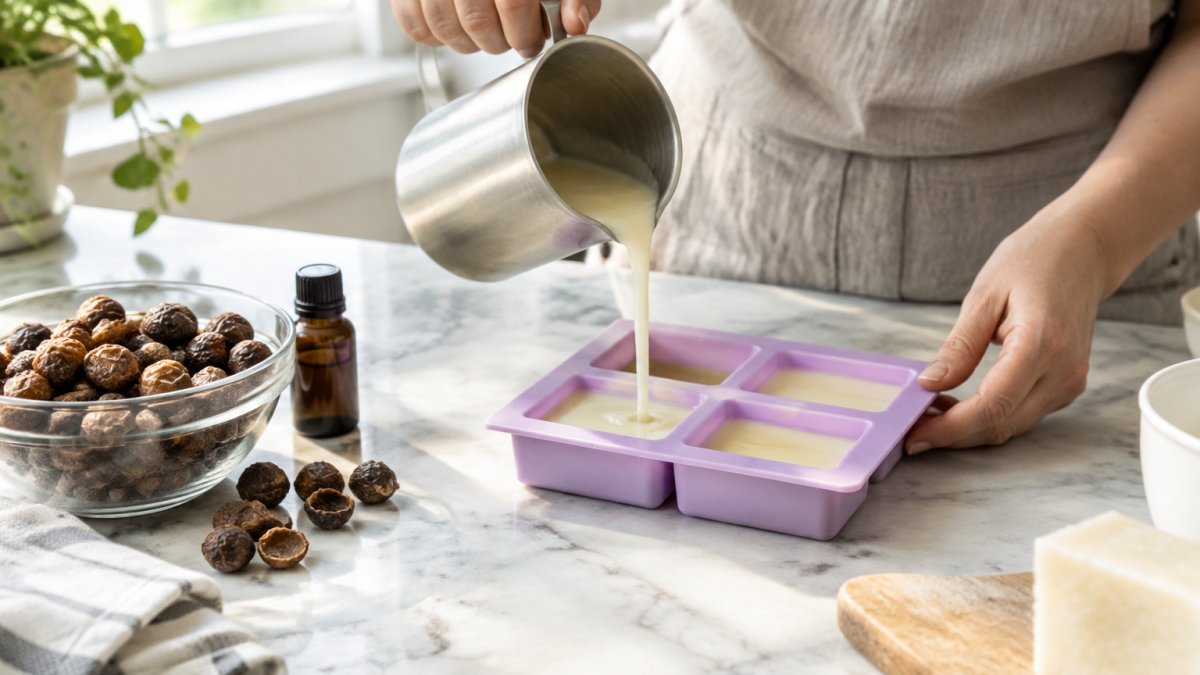
Melt-and-Pour Steps for a Custom Bar
- Cut the soap base into small cubes so it melts evenly.
- Place the cubes in a heatproof jug over a pan of simmering water, stirring gently until fully melted.
- Remove from the heat and stir in a few drops of essential oil if you want scent.
- Pour into a silicone mould and tap it lightly to release air bubbles.
- Leave to cool at room temperature until firm, then unmould.
Soapnut Fruit Uses Beyond the Soap Base
Soapnut fruit does more than make bar soap. Soapnut Republic HK sells a ready-made fruit and vegetable wash for exactly this purpose.
Choosing a Soapnut Soap Base for Your Family
Choose a soapnut soap base that lists soapnut berries first, names every ingredient, and scents only with essential oils if your household includes young children, pets or anyone with allergies. You can shop natural cleaners for families and read each formula before buying.
Soapnut Republic builds its products around soapnut fruit extract, with fully listed ingredients, essential-oil scent and biodegradable formulas. If natural cleaners disappointed you before, start with a single bar and test it on the sink by the kitchen door. Get started with Soapnut Republic and find the soapnut formula that fits your family's routine.
Frequently Asked Questions
無患子皂基有什麼功效?
Soapnut soap base cleans by way of saponins, the natural plant surfactants found in the soapnut fruit. These lift dirt and oil from skin and surfaces. It is not a treatment product, so expect gentle everyday cleansing rather than medicated results.
Can soapnut soap base leave skin feeling dry or tight?
A well-made soapnut soap base usually leaves skin comfortable rather than dry, because the glycerine content and the mild saponins reduce the stripped feeling that harsh surfactants cause. Very dry or eczema-prone skin can still react to any soap, so patch-test on the inner arm first. Follow with a fragrance-free moisturiser if your skin tends to dryness.
How is soapnut soap base different from a conventional bar of soap?
Conventional bars often rely on synthetic surfactants, added fragrance and colour, while a soapnut soap base uses plant-derived saponins as the cleansing agent, with essential oils providing scent. The practical difference is in the ingredient list: a transparent soapnut base lists soapnut berries near the top, so you can see how much extract you are actually getting before you buy.
Is soapnut soap base safe for children and pets?
Soapnut Republic products are plant-based and designed to be safe for children and pets. Still, no soap is edible and saponins can irritate eyes, so keep bars out of reach, rinse surfaces well after cleaning, and patch-test on children with known skin sensitivities before regular use.


